How Business Coach Uses Bruce Tuckman’s Model to Strengthen Project


Management Team: Practical experience
How Business Coach Uses Bruce Tuckman’s Model to Strengthen Project
As a business coach, one of the most common challenges I encounter is helping leaders and teams move from a group of individuals working side by side into a cohesive, high-performing unit. Bruce Tuckman’s Team Development Model (BTTDM) remains one of the most practical and reliable frameworks for guiding this journey. Since its introduction in 1965, and the later addition of the “Adjourning” stage, the model has provided leaders and coaches with a clear roadmap for understanding team dynamics and adapting leadership approaches accordingly.
In project management specifically, success depends not only on processes, schedules, or tools — but also on how well the team functions together. Even the most sophisticated Gantt chart or Agile board cannot compensate for a team that is misaligned, disengaged, or stuck in conflict.
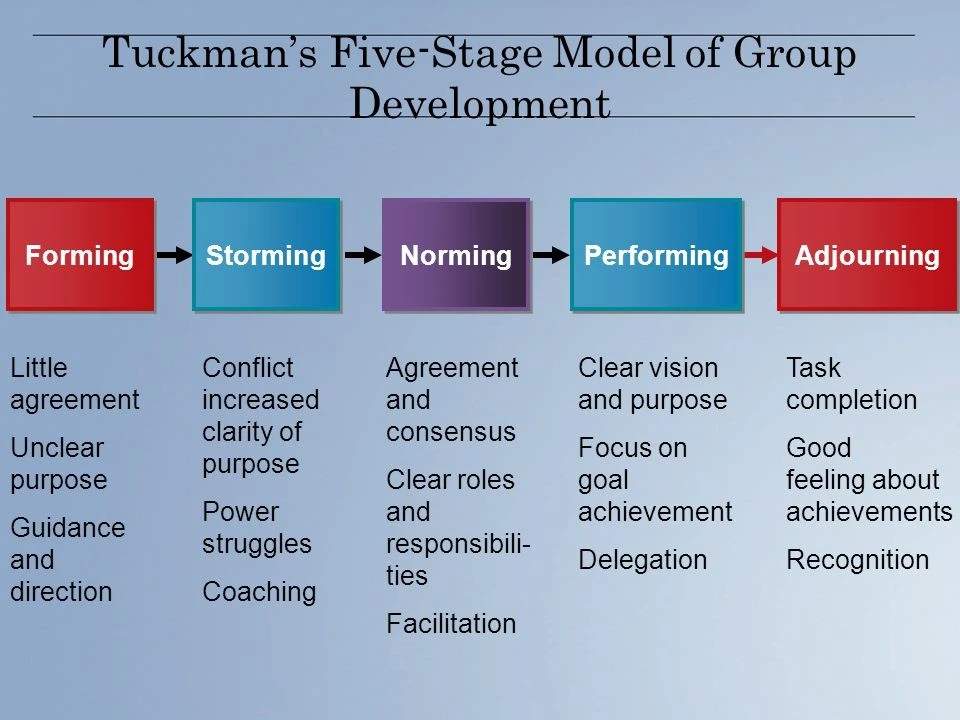
This is where BTTDM (Forming, Storming, Norming, Performing, Adjourning) becomes a practical coaching framework for project managers and their teams. An experienced coach can help a project team navigate these predictable stages of group development, ensuring they move from uncertainty to high performance with fewer disruptions.
Let’s start with Understanding the Five Stages

Before exploring its use in coaching, let’s briefly recap the five BTTDM stages:


  • Forming – Teams are new, polite, and somewhat uncertain.
  • Storming – Differences surface, conflicts arise, and frustrations peak.
  • Norming – Roles clarify, trust builds, and collaboration begins.
  • Performing – The team is fully aligned, autonomous, and productive.
  • Adjourning – Work concludes, and the team dissolves or transitions.

Each stage is natural and necessary. Problems arise not because teams experience these phases, but when leaders and team members fail to recognize or respond appropriately to them. Now the time has come to explore briefly details and determine the business coach role for each of the stages.


1. Forming – Building Foundations
What happens: In the early stage, the project team is coming together. Members are polite, roles are still unclear, and everyone looks to the project manager for direction.
How a coach helps:
  • Guides the project manager to run an effective kickoff meeting.
  • Encourages clarity around roles, scope, and communication norms.
  • Helps set the tone for trust and psychological safety from day one.

Practical tip: The coach ensures that the PM doesn’t rush into execution before the team has a clear sense of shared purpose.

2. Storming – Navigating Conflict

What happens: Differences in working styles, expectations, or priorities surface. Conflict arises, and progress may feel slow.

How a coach helps:
  • Coaches the PM to anticipate and normalize conflict as a healthy stage, not a failure.
  • Provides conflict-resolution techniques and encourages open feedback loops.
  • Helps team members practice active listening and respect diverse perspectives.

Practical tip: A skilled coach trains the PM to act as a mediator, not a dictator, preventing unresolved conflict from derailing momentum.


3. Norming – Establishing Collaboration

What happens: The team begins to resolve differences, align processes, and build stronger working relationships. Collaboration improves, and trust grows.


How a coach helps:


  • Supports the PM in delegating more responsibility, reducing micromanagement.
  • Reinforces practices like stand-ups, retrospectives, and shared dashboards.
  • Encourages recognition of progress, reinforcing positive team behaviors.

Practical tip: The coach helps the PM shift from “command-and-control” to facilitation and empowerment.


4. Performing – Driving High Performance

What happens: The team is highly autonomous, motivated, and effective. They solve problems independently, deliver results reliably, and collaborate seamlessly.


How a coach helps:


  • Guides the PM to focus on strategic alignment with stakeholders instead of day-to-day firefighting.
  • Encourages celebrating milestones to maintain motivation.
  • Helps identify and remove remaining barriers so the team can sustain peak performance.

Practical tip: The coach ensures that the PM trusts the team and steps back into an enabler role, avoiding unnecessary interference.


5. Adjourning – Closure and Reflection

What happens: At project completion, the team disbands. Without closure, valuable knowledge may be lost and morale may decline.

How a coach helps:


  • Facilitates retrospectives and lessons learned workshops.
  • Guides the PM in acknowledging contributions and celebrating success.
  • Encourages proper knowledge transfer to future projects.

Practical tip: A coach helps transform closure into growth, ensuring team members carry forward lessons, not just memories.


Why Tuckman’s Model Still Matters in today’s Project Management and Business World


Despite its age, the model resonates because human dynamics haven’t changed as much as technology. Startups, remote teams, agile squads, and multinational corporations all cycle through these phases. Business coaching, when grounded in Tuckman’s framework, ensures leaders:


  • Recognize where their team is.
  • Understand what the team needs next.
  • Adapt their leadership style for maximum effectiveness.


For project managers, Tuckman’s model is more than a theory — it’s a roadmap for leadership behavior. Each stage requires a different management style: directive in Forming, mediating in Storming, facilitating in Norming, delegating in Performing, and recognizing in Adjourning.

A business coach acts as a guide on this journey, ensuring the project manager adapts effectively, avoids common traps, and helps the team reach high performance faster.


Final Thought


Projects succeed when process and people work in harmony. By applying Bruce Tuckman’s Team Development Model within project management, a coach empowers leaders to anticipate challenges, guide their teams with confidence, and unlock collective potential.

In my experience, the most successful leaders are those who treat team development as a journey rather than an assumption. By embedding Tuckman’s Team Development Model into coaching conversations, I help leaders anticipate challenges, embrace conflict as growth, and accelerate their path to high performance.


The true art of business coaching lies not in rushing teams to the Performing stage, but in guiding them through each phase with awareness, patience, and adaptive leadership.


In the end, the most valuable project deliverable is not just the product or service created, but a stronger, more capable team that is ready for the next challenge.