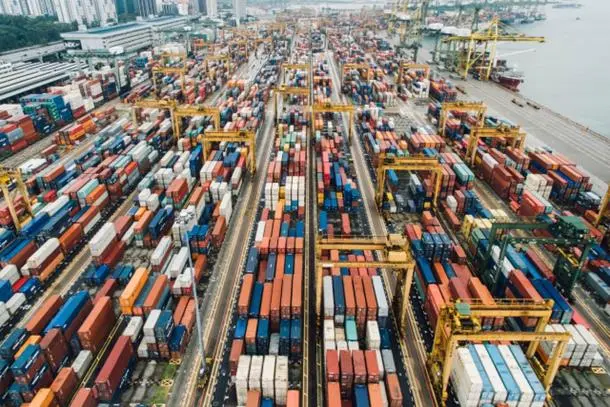
Sales development through International Trade Finance

International trade finance is a kind of umbrella term that means that such financing covers many different financial products that banks and companies use to make international trade transactions easy and feasible.
Trade finance is a sort of umbrella term, which means it covers many financial products that banks and companies utilize to make international trade transactions easy and feasible.

As a complex of tools, techniques, and instruments that facilitate international commerce, Trade Finance was created to protect both buyers and sellers from trade-related risks. It exists to mitigate, or reduce, the risks involved in an international trade transaction. Thus, the purpose of Trade Finance is to make it easier for businesses to transact with each other. In fact, Trade Finance is the financing of international trade flows.

However, cross-border trade is inherently more complex than domestic transactions. It involves multiple jurisdictions, currencies, legal systems, cultural expectations, and risks—ranging from commercial disputes to political instability. To manage these complexities, global trade relies on standardized frameworks, contractual practices, and financial instruments.

Among the most important of these frameworks are the rules developed by the International Chamber of Commerce (ICC), including Incoterms® rules, Uniform Customs and Practice for Documentary Credits (UCP 600), and other trade facilitation standards. These tools provide a common language and structure for international transactions, reducing ambiguity and enabling smoother execution.

International Trade Architecture


Before you start your first serious operation in the field of international trade, I advise you to familiarize yourself with at least a general outline of the terminology and rules of international trade. So, basically, international trade consists of three interconnected flows:

Flow of goods

The physical movement of goods from the seller (exporter) to the buyer (importer) typically includes:

Transportation (sea, air, road, rail)

Warehousing and logistics

Customs clearance procedures


Funds Flow

The transfer of payment from buyer to seller, using instruments such as:

  • Open account payments
  • Documentary collections (D/P, D/A)
  • Letters of credit
  • Factoring, Forfaiting & Invoice Discounting,
  • Demand Guarantees & Bonds,
  • Supply Chain Finance,
  • Credit Insurance,
  • Structured Trade / Commodity Finance,
  • Export Agency Finance,
  • Trade credit …

Documents Flow


The exchange of documents that trigger and control goods and funds flow, include:

  • Commercial invoices
  • Bills of lading
  • Insurance certificates
  • Certificates of origin
  • Financial instruments (bills of exchange, promissory notes)

The synchronization of these flows is critical. Misalignment often results in disputes, delays, or financial loss.

To avoid chaos in terms, use and solutions the International Chamber of Commerce (ICC) took a central role in harmonizing international trade practices. ICC develops widely accepted rules and standards that are voluntarily adopted by businesses and financial institutions worldwide. Standardized trade terms define responsibilities for:

  • Delivery
  • Risk transfer
  • Cost allocation

Incoterms® Rules: Structure and Function

Incoterms® (International Commercial Terms) are standardized trade terms published by the ICC that define the responsibilities of buyers and sellers in international transactions. The latest version (as of now), Incoterms® 2020, divides 11 rules into two main categories:

Rules for Any Mode of Transport

  • EXW (Ex Works)
  • FCA (Free Carrier)
  • CPT (Carriage Paid To)
  • CIP (Carriage and Insurance Paid To)
  • DAP (Delivered at Place)
  • DPU (Delivered at Place Unloaded)
  • DDP (Delivered Duty Paid)

Rules for Sea and Inland Waterway Transport

  • FAS (Free Alongside Ship)
  • FOB (Free On Board)
  • CFR (Cost and Freight)
  • CIF (Cost, Insurance and Freight)


They address:


  • Who arranges transport
  • Who bears risk at each stage
  • Who pays for insurance and freight
  • Who handles export/import formalities


and are suitable for a unique or a standard trade transaction.


Use of Incoterms® Within the European Union

You may ask me why? EU is a single market! Just because - even within a single market:

  • Responsibilities for delivery and risk must be clearly defined.
  • VAT and logistics responsibilities vary.
  • Contractual clarity reduces disputes.

Common EU Practices

  • EXW is often avoided due to VAT/export compliance risks.
  • FCA is preferred for intra-EU trade because it aligns better with logistics and documentation.
  • DAP/DDP are used when sellers provide full delivery solutions.

Legal Considerations

  • Incoterms® are not laws but contractual tools.
  • Must be explicitly incorporated into contracts (e.g., “FCA Warsaw Incoterms® 2020”).


As you see, there are too many factors, that may influence the choice of instrument in International Trade transaction. Since that, businesses must be very careful while structuring international business transactions.



How we can help in scaling your International Trade

More detailed and updated information can be found in the relevant blog articles. Wecome.
For your convenience, you can download the document "Template Trade Finance" in the lower part of this page, under the "Fill in the fields | Download the file" button.After filling out the form, close the tab, then you can download the template. Enjoy!
Survey -> Download